
Updated September 14, 2026
Most homebuyers do not wake up and check the price of oil before asking about mortgage rates.
Lately, I have been doing exactly that.
Oil does not directly set mortgage rates. But when energy prices move sharply, especially during a geopolitical conflict that threatens global supply, oil can become one of the clearest signals for where inflation expectations and long term bond yields may go next.
This is one part of a much bigger picture. If you want the full explanation, start with What Really Moves Mortgage Rates? The 7 Forces I Watch Every Morning.
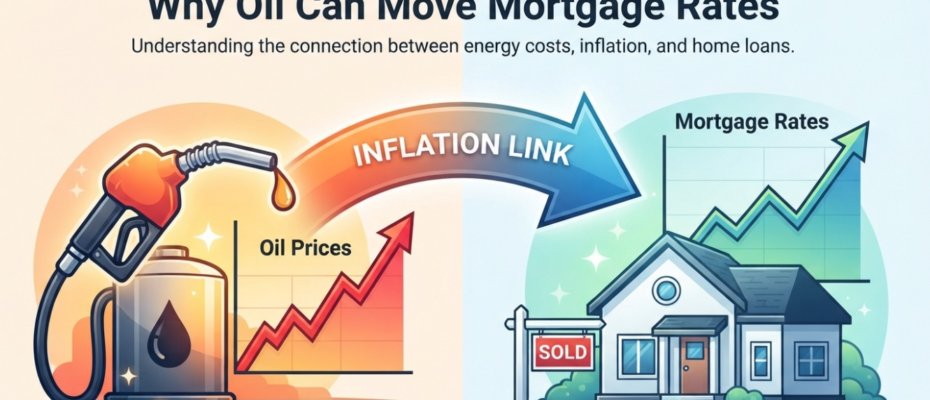
Quick answer: Higher oil prices can put upward pressure on mortgage rates because energy costs can increase inflation expectations. When investors expect inflation to remain higher, Treasury yields and mortgage backed securities can weaken, which can make mortgage pricing more expensive.
The simple chain from oil to mortgage rates
The connection usually looks something like this:
- Oil prices rise sharply
- Markets worry that transportation and production costs will rise
- Inflation expectations increase
- Bond investors demand higher yields
- Treasury yields rise and mortgage backed securities may weaken
- Mortgage rates come under upward pressure
It does not happen perfectly every day, but when energy is the dominant market story, the relationship can become surprisingly tight.
Why oil matters to inflation
Energy touches almost everything.
Businesses pay to move products. Airlines, trucking companies, manufacturers, farmers, delivery companies, and consumers all feel changes in fuel costs. If those costs remain elevated, some of them can eventually show up in the prices consumers pay.
Bond investors care because inflation reduces the future purchasing power of the fixed payments they receive. If investors think inflation will be higher, they generally demand a higher yield.
Why this matters so much in the current market
The current market is a good example of why rate analysis cannot stop with the Federal Reserve.
Oil has moved back above $100 a barrel as the conflict involving Iran continues to disrupt global energy markets. At the same time, long term Treasury yields have been pushing toward levels not seen in years. That combination keeps inflation risk front and center even when another economic report looks relatively calm.
We have also seen days when Treasury buyback headlines briefly helped bonds, only for higher oil prices to take control again. That is a reminder that market intervention can affect liquidity, but it does not automatically erase the inflation story investors are pricing.
Does falling oil mean mortgage rates will automatically improve?
No.
Oil is one force among several. A weak jobs report could help bonds while oil is rising. A hot inflation report could hurt bonds while oil is falling. A poor Treasury auction could overwhelm an otherwise quiet day.
What matters is which story the market cares about most at that moment.
What I watch when oil starts moving
- Whether the move is temporary or sustained
- Whether Treasury yields are moving with oil intraday
- Whether inflation expectations are also moving
- Whether mortgage backed securities are outperforming or underperforming Treasuries
- Whether upcoming CPI, PPI, jobs, or Federal Reserve events could replace oil as the dominant market driver
That is why my daily rate commentary can sound different from one day to the next. The underlying framework does not change. The dominant force does.
See the market in real time: Today’s St. Louis mortgage rates and Sean’s daily take.
What should a buyer do when oil pushes rates higher?
Do not make a homebuying decision from an oil headline alone. Make it from your numbers.
Use the Rate Buying Power Calculator to see what a quarter point or half point rate change actually does to the price range your payment supports.
Then use the Full Mortgage Payment Calculator to include taxes, insurance, and mortgage insurance instead of looking only at principal and interest.
If a seller is willing to help with closing costs, compare that strategy with a Temporary Buydown Calculator rather than assuming the only solution is waiting for rates to fall.
The bottom line
Oil is not the mortgage rate. But when energy prices are moving quickly enough to change the inflation outlook, the bond market pays attention.
That is what homebuyers should understand. Mortgage rates are a market price, and markets are constantly trying to price what comes next.
You do not need to monitor oil futures, Treasury auctions, inflation expectations, and mortgage backed securities all day. That is my job.
For the full framework, read What Really Moves Mortgage Rates? Then check today’s mortgage rates to see what those forces are doing to pricing now.
Frequently asked questions
Do oil prices directly set mortgage rates?
No. Oil can influence inflation expectations, and inflation expectations can influence bond yields and mortgage backed securities. The connection is indirect but can be powerful during large energy moves.
Why can higher oil prices hurt bonds?
Higher energy costs can increase concern about future inflation. Bond investors may demand higher yields to compensate for the risk that future dollars will have less purchasing power.
Can mortgage rates fall while oil rises?
Yes. Other forces such as weak employment data, a recession concern, strong demand for Treasuries, or a dovish Federal Reserve shift can outweigh the impact of oil.
What market should I watch for mortgage rates?
The 10 year Treasury is a useful public gauge, but mortgage backed securities are more directly connected to lender mortgage pricing.
What should I do if rates rise while I am shopping for a home?
Run the impact on your actual payment and buying power. You may have options involving price, down payment, seller credits, temporary buydowns, or loan structure that are more useful than trying to predict the next market move.
Want to know more?
What Really Moves Mortgage Rates? The 7 Forces I Watch Every Morning